|
The greatest gift that you can give to anybody is the gift of your honest self. It's the only unique gift anyone can give.
-Fred Rogers
The words of Mr. Rogers provide the underlying theme of what I am about to share with you.
For most of my life I have lived with the twin demons of anxiety and depression.
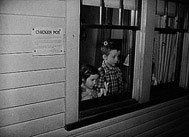
For a very long time I did not know them by name, only by experience. When I was a youngster the worst thing you could get was chicken pox or whooping cough. Where I grew up, anything else one could handle with lots of spaghetti sauce.
 When I was a teenager the universal solvent for anything that bothered you was a shower, preferably a cold shower.
The problem was our home did not have a shower. If truth be told, I was 24 years old before I lived in 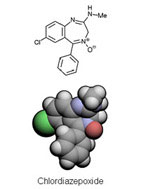 a place with a shower.
By that time doctors over prescribed Librium (Chlordiazepoxide). It was the new wonder drug. It cured everything. Unfortunately, it did not work for me. All it did was cause every gland in my body to swell.
One morning I looked in the mirror to find my lips five times the size of their normal self. A traumatic experience that made me apprehensive about putting any chemical into my system for many years to come.
For the next 30 years I did it the old fashioned way, I toughed it out. In the parlance of our culture, it may have been the manly thing to do, but it was not the most effective thing to do.
Fast forward to 2004 and beyond. In some respects it was the worst period of my life as these two demons tormented me virtually every day of the year. Overstressed by a number of things that need not be mentioned here, I constantly was at war with 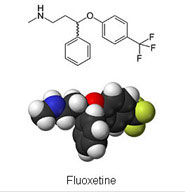 myself.
On the advice of my family doctor, I tried Prozac (Fluoxetine) for a while. It put me in such a state that I could not function.
So I returned to my diehard solution of hard work and self-discipline.
The nighttime hours were the worst. I could not sleep, and the insomnia made matters worse.
I knew I was in trouble, but the only solution I knew was to work even harder, and this only added to the stress that eventually caught up with me on Memorial Day 2007.
Why I did not die that day will always be a mystery to me. The doctors say that it 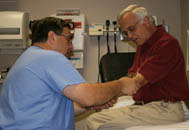 was because my heart was so strong. I think it was the effective use of aspirin therapy. Whatever the case, the cardiac event led to a catheterization and that, in turn, led to quadruple bypass surgery.
One of the very first things I learned from the doctors and nurses after the operation was to expect bouts of anxiety and depression. That was certainly great news. I knew these two guys intimately, and I knew what they could do to you.
How could I recover from major surgery and deal with these twin demons as well?
The answer was very easy. During the first three weeks, they never showed up. My recovery progressed smoothly without incident. Could it be that the 13-inch opening in my chest gave them an escape route?
Not exactly. It’s more accurate to say they went on vacation for a while, but they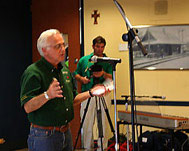 were not gone for good.
They returned just in time to attend the Irish Teachers Festival. When I saw the crowd, I welled up. When I talked about my former teacher, a person who saved my life, the tears flowed again. When I eyed my wife, daughter and grandchildren in the crowd, there were more tears. It was a Kleenex evening, and it followed the script that post-operative depression experts warned me about.
At the end of the evening with my blood pressure and pulse rate skyrocketing from the excitement, I 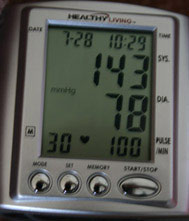 had an unpleasant experience with a friend. It happened in nanoseconds, and it was almost without warning.
A perceived slight and a minor volcano erupted. It was as if I were two people standing there, and for a moment my emotions were out of control.
Shortly after that event, my demons paid me a call in an even more dramatic way. This time I was sitting in front of my computer screen reading an e-mail from someone I admire and respect. Something that I hoped would be in 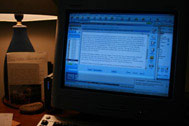 the text was not there, and it sent my blood pressure and pulse rate soaring.
In warp speed, I let my emotions guide my judgment and my fingers fired off a short, caustic reply. There was little doubt that my two companions were here to stay.
What is so baffling about this incident is that it happened on one of those days when  everything seemed to be going well. There were 25 pleasant e-mails. I was making progress on a project that was long overdue. The weather was glorious. The sun was high in the sky and The Garden of Life was filled with robins, gold finches, a few hummingbirds and one or two mourning doves. The sounds were peaceful and very pleasant.

I received a beautiful get well present from an old friend from the college. One of my very favorite people, Julie Marvel, responded to our Windsor Park newsletter with words of kindness and encouragement.
When the mail arrived there were two inspirational thank you cards with handwritten messages that were thoughtful and affirming.
Memories of a wonderful visit at the hospital with my surgeon, Michael Harostock, the 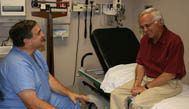 day before added an extra bounce to my step that morning.
The day was off to a wonderful start, and it looked like clear sailing ahead, or at least, that’s what I thought.
Like too many days during my recovery, however, I was doing too much. That’s always been a problem for me. I need to be busy, productive, involved. I am happiest when I have more on my plate than I can handle. It drives Kitch nuts, and it isn’t very good for a person with a healing heart.
My editing suite is below ground, and I was moving between the editing room and the 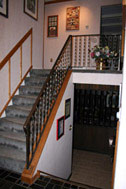 place where I do my writing. Every change of place involved descending and climbing 14 steps. I had made that trip several times during the morning.
Then it happened. I was racing between two locations…writing and reading two different e-mails, and my old demons paid me a visit. It wasn’t pleasant.
This is one part of open-heart surgery that patients don’t like to talk about. It’s one of those “in the lodge” affairs. The patient knows it exists. Family members and friends know it exists. Physicians know it exists, yet few patients feel comfortable talking about the anger and depression that often accompanies open- heart surgery.
Quite honestly, I didn't believe it when I read about it prior to my operation or when I was cautioned about it after the operation. Now I am living it, and doing the best I can to cope with it
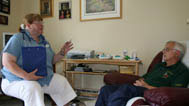 My Gentiva nurse, Elaine Blessing, explained it to Kitch and me during her first visit. When she asked me about it, I answered honestly. I had no depression while I was in the hospital, and to that point in the recovery process I was depression free.
One of the most positive things about the surgery for me was an increased sense of gratitude for being alive, and a feeling that many things I once thought important were just not that essential to a happy, productive life.
In my mind, I was better able to sort out what really is important in life, and I was doing very well.
I should have known better than to believe I would not experience both anxiety and depression at some point during recovery.
It comes out of nowhere, and it manifests itself in many different ways, but the result is always the same. In my case there is a sudden increase in blood pressure and pulse rate. There is a feeling of abandonment, then anger which is usually followed by harsh thoughts and words and then remorse and embarrassment,
The experts explain it this way. They say that depression in recovering heart patients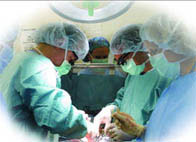 can be the result of the deep anesthesia one must have for this operation. It can also be a result of the need for a ventilator. Some believe it is all physiological. Others say it is purely psychological. It can get a little confusing especially to caregivers who have more than they can handle.
In her book, The Open Heart Companion, Maggie Lichtenberg tells her readers that many patients are unprepared for bouts of irritability, unexplained sadness, sudden weeping and so on…all normal reactions to the trauma of major surgery that should be transient and gradually disappear within three months.
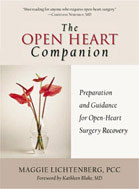 According to Lichtenberg, 30 to 40 percent of open-heart patients experience depression and/or anger once they are home and recovering. For Lichtenberg, a heart valve patient herself, this makes sense really, because having to undergo open-heart surgery is a trauma to begin with.
In an article written by Paige Bierma, Ralph Aron, president of The Mended Hearts chapter in San Francisco for the past 15 years, says depression, anger, and fear are common feelings among heart surgery patients. "We try to help people realize that these are perfectly normal reactions, and that you can handle it and that you will get over it," says Aron, who had an aortic heart valve replaced in 1962.
Volunteers like Aron often visit patients in the hospital, Bierma continues, before they go in for heart surgery, offering to answer any questions the patients might have. After surgery, members check up on those in recovery and offer encouragement and tips from their own experiences.
All I know is that it is real, and it is not a pleasant experience.
You can be fine one minute, and then you well up with tears the next minute.
You can be laughing, and then suddenly your mood turns to sadness.
One thing is certain. Support, patience and understanding from family and friends is vital to this as well as all the other aspects of recovery. Just because a person looks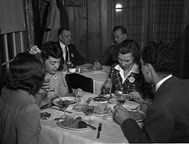 well does not mean that the person is well. You cannot read pulse rate and blood pressure on a person’s face. People who are prone to anxiety, anger and depression are masters at masking these demons. No one wants to appear weak and in need of help. To be quite honest, real men don’t eat quiche. They do eat lots of spaghetti sauce, and that’s the problem. Most men are conditioned to tough it out. They will not ask for help because they see it as a sign of weakness.
So I end where I began with one addition:
The greatest gift that you can give to anybody is the gift of your honest self. It's the only unique giftanyone can give.
-Fred Rogers
If you bring forth what is within you, it will save you.
If you do not bring forth what is within you, it will kill you.
-The Gospel of Thomas
(Photographs for the article were provided by; Kitch Loftus-Mussari, The Library of Congress, Prints & Photographs Division, FSA-OWI Collection, Wyoming Valley Health Care)
 Please send feedback to:
This e-mail address is being protected from spambots. You need JavaScript enabled to view it
|

